Free shipping in NL, BE and DE – worldwide delivery

Vegan bedding for better nights
What makes bedding genuinely vegan, and why bamboo is the natural fit for a plant-based lifestyle.
Vegan bedding sounds like it should be obvious — bedding without animal products. But once you start looking, it gets more nuanced. Some bedding is made from plant fibres but processed using animal-derived chemicals. Some looks vegan but uses down filling. And some products labelled vegan are technically correct but not particularly sustainable. Here's what actually makes bedding vegan, and why bamboo bedding is one of the most natural fits for a plant-based lifestyle.
- What makes bedding vegan
- Why bamboo is a natural fit
- Vegan duvets — the hidden challenge
- What to check before you buy
- Beyond vegan: ethical sleep
What makes bedding vegan
Truly vegan bedding contains no animal-derived materials at any point in production. That means no down or feathers, no wool, no silk — and also no animal-derived dyes, finishes, or processing aids. The last bit is where many products fall short: a fabric can be 100% plant fibre but treated with lanolin (from sheep) or processed using bone char as a filter.
Bedding that's genuinely vegan is plant-based from start to finish. That includes the dye process, the softening agents, and any chemical treatments along the way.
Why bamboo is a natural fit
Bamboo is one of the cleanest fits for vegan bedding. The plant grows on its own — no animal involvement at any stage. The fibre is naturally soft, so heavy chemical softening (which sometimes uses animal-derived agents) isn't necessary. And modern bamboo bedding from reputable brands uses OEKO-TEX-certified dyes that are vegan-friendly by default.
Add to that bamboo's other strengths — temperature regulation, antibacterial properties, sustainability — and it's hard to find a better aligned material for plant-based living.
Vegan duvets — the hidden challenge
Bedding sets are easy to make vegan. Duvets are harder. Traditional duvets use down (plucked from ducks and geese) or wool (from sheep) for warmth. Both are animal products, and the down industry in particular has been heavily criticised for animal welfare practices.
Vegan duvet alternatives include:
- Bamboo-fibre filling — naturally insulating, breathable, and 100% plant-based
- Recycled polyester — vegan but petroleum-derived, less sustainable
- Cotton or kapok — both vegan, with varying warmth and weight
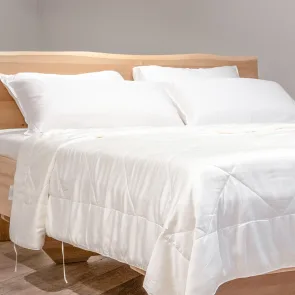
Boomba Bamboo summer and winter duvets use bamboo-fibre filling — vegan, breathable, and naturally temperature-regulating.
What to check before you buy
- The fibre — 100% plant-based (bamboo, cotton, linen, hemp)
- The filling — for duvets and pillows, check that it's not down, feather, or wool
- The certifications — OEKO-TEX Standard 100 confirms no harmful residues; some brands also carry vegan certifications
- The processing — reputable brands document their dye and finishing processes
- The packaging — fully vegan brands typically also avoid animal-derived adhesives in packaging
Beyond vegan: ethical sleep
For many people, vegan bedding isn't just about avoiding animal products — it's about choosing materials that are kinder to animals, the environment, and ultimately the people sleeping on them. Bamboo ticks all three: no animal involvement, low environmental impact, and gentle on skin.
If a vegan lifestyle is part of how you live, your bedding should match. Browse the full bamboo range — every product is plant-based, OEKO-TEX certified, and made to last.
OUR CATEGORIES


ANOTHER TALE BEFORE BEDTIME