Free shipping in NL, BE and DE – worldwide delivery

Dry air in the bedroom: why you wake up with a dry throat in winter
Once the central heating comes on, bedroom humidity often drops below 30 per cent. Why that happens, how to measure it and what makes the biggest difference overnight.
It usually starts in late October. You wake up with a throat like sandpaper, your lips are cracked and your hair crackles when you pull off a jumper. Nothing is wrong with you. The air in your bedroom is simply too dry.
Most people sleep best at a relative humidity of 40 to 60 per cent. In a centrally heated British home it regularly falls to 25 to 35 per cent over winter. The easiest fix is not a humidifier. It is a cooler bedroom and a warmer bed.
Why the air gets so dry in winter
Cold air can only hold a little water vapour. Outdoor air at 0°C and 80 per cent humidity feels damp, but it actually carries very little water. When it comes indoors and the radiators warm it to 20°C, that small amount of water stays the same while the air could now hold far more. Relative humidity drops to around 20 per cent.
You still need to ventilate. Trickle vents, extractor fans and opening a window are what keep condensation and black mould off the walls in most UK homes. The catch is that all that fresh air is dry winter air, and the heating makes it drier still.
What dry air does while you sleep
You spend seven or eight hours breathing in and out without drinking anything. If you sleep with your mouth open, because of a blocked nose for example, your throat dries out even faster. The familiar signs:
- a dry or scratchy throat when you wake up
- a dry nose, sometimes with crusting or a small nosebleed
- cracked lips and tight skin on your cheeks and hands
- gritty, stinging eyes in the morning
- frizzy hair full of static
If you have eczema or sensitive skin, you may notice it flaring as soon as the heating goes on. We looked at what bedding can do about that in eczema and sensitive skin: choosing the right bedding.
If a sore throat does not improve after a week, or comes with a high temperature, check the NHS advice on sore throats or speak to your GP or pharmacist. Dry air explains a lot, but not everything.
Measure it first
A digital hygrometer costs less than £15 and will tell you within a day whether your bedroom really is too dry. Keep it away from the radiator and the windowsill, somewhere in the middle of the room at roughly bed height. Check it when you go to bed and again when you get up. Your own breathing usually pushes the morning reading up by a few per cent.
Five things that actually help
1. Turn the bedroom radiator down. It sounds backwards, but the same amount of moisture gives a higher relative humidity at 17°C than at 21°C. In the example above, that is roughly 25 per cent instead of 20. A cool room is also better for sleep: 16 to 18°C suits most people, as we explain in the optimal temperature for a restful night's sleep.
2. Warm the bed, not the room. A cooler bedroom needs a duvet that insulates well. UK shops usually label duvets by tog; we list ours by fill weight. Our bamboo winter duvet has 400 g/m² of bamboo fibre inside a bamboo shell, so the warmth stays with you while the moisture you give off at night can escape. Not sure which one you need? Read the difference between winter and summer duvets.
3. Air the room briefly and fully. A window left on the latch all day chills the walls and lets dry air in for hours. After you get up, open the windows wide for ten minutes instead. The air is refreshed before the room has properly cooled. Leave the trickle vents open.
4. Add moisture carefully. A humidifier only makes sense if your readings stay below 35 per cent for a sustained period. Empty and clean the tank every day, because bacteria and mould grow in standing water. Do not set it above 50 per cent: above 60 per cent you are giving dust mites and mould exactly what they want. Drying washing on the bedroom radiator does raise humidity, but in a small room it quickly turns into condensation on the windows. Do that elsewhere.
5. Keep a glass of water by the bed. Have a few sips before you sleep and if you wake in the night. It will not fix the air, but your throat will notice.
Where your bedding comes in
Bedding cannot make the air more humid. It does decide how your skin and hair cope overnight.
Synthetic fabrics such as polyester and microfibre absorb almost no moisture. In dry air they build up static quickly, which is the crackle you hear when you climb out from under a fleece throw. Bamboo viscose is a cellulose fibre that does absorb moisture, more than cotton. That means it hardly holds any static and does not feel clammy or sticky in winter.
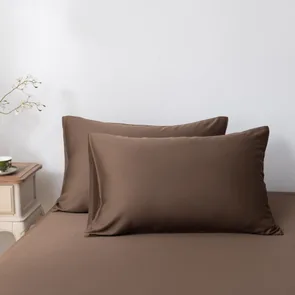
For your face and hair, smoothness matters most. A bamboo pillowcase in 400TC sateen is smooth enough that hair and skin glide over it instead of rubbing. If your hair goes dry and frizzy every winter, you will notice the difference within a few nights. There is more on this in clean sleeper: why bamboo is good for skin and hair.
Wash your bedding at 30°C and skip the fabric softener. Softener leaves a coating on the fibres that stops them absorbing moisture. For how often to wash, see how often should you wash your sheets?
A winter checklist for the bedroom
- bedroom thermostat or radiator valve set to 16 to 18°C
- a hygrometer in the middle of the room, aiming for 40 to 60 per cent
- ten minutes of airing in the morning, trickle vents open
- a winter duvet with a breathable shell
- a bamboo duvet cover and fitted sheet that absorb moisture and stay static-free
- a glass of water by the bed
For curtains, draughts and the rest of the room, read how to make your bedroom winterproof. And if you have people coming to stay over Christmas, our checklist will help you get the guest bed ready.
Frequently asked questions
What is the ideal humidity for a bedroom?
Between 40 and 60 per cent. Below 40 per cent your skin and airways dry out faster; above 60 per cent mould and dust mites thrive. In winter, 40 to 50 per cent is a realistic target.
Why do I wake up with a dry throat?
Usually dry air combined with breathing through your mouth while you sleep. A cooler bedroom and a glass of water before bed help. If it lasts more than a week, speak to your GP or pharmacist.
Does a bowl of water on the radiator help with dry air?
Barely. Too little water evaporates to make a bedroom noticeably more humid. Turning the bedroom radiator down has a bigger effect.
Should I use a humidifier in the bedroom?
Only if your readings stay below 35 per cent for a sustained period. Empty and clean the tank daily and do not set it above 50 per cent.
Does bamboo bedding get static in winter?
Far less than polyester or microfibre. Bamboo viscose absorbs moisture from the air and your skin, so very little static builds up.
OUR CATEGORIES





ANOTHER TALE BEFORE BEDTIME