Free shipping in NL, BE and DE – worldwide delivery

The art of daydreaming
Daydreaming isn't wasted time. It's a quietly important mental process — and we're losing the habit. Why it matters and how to bring it back.
Once upon a time, staring out of the window was a normal part of the day. Now we fill every spare moment with a phone, a podcast, a notification. We've quietly engineered daydreaming out of our lives — and it's costing us. Daydreaming isn't laziness. It's how the brain processes, integrates, and creates. Reclaiming it is one of the easier upgrades to overall wellbeing, and it costs nothing.
- What daydreaming actually does
- The cost of constant input
- How to bring it back
- The bedroom angle
- Permission to be useless
What daydreaming actually does
The brain has a default mode network — a set of regions that activate when you're not focused on a specific task. This network does the unglamorous but essential work of integrating experiences, consolidating memories, planning the future, and making creative connections between ideas. Most people's biggest insights — solutions to problems, decisions about big life choices, creative breakthroughs — come during default-mode states. Showers. Walks. Lying in bed. Staring at clouds.
Cut off this network with constant external input, and you cut off the brain's processing time. People who never daydream often feel mentally cluttered without knowing why.
The cost of constant input
Modern life is engineered to fill every gap. Stand in a queue: phone. Eat alone: podcast. Walk somewhere: audiobook. Wake up: scroll. Lie in bed at night: scroll again. The brain has nowhere quiet to go.
The cost shows up as: trouble making decisions, loss of creativity, feeling vaguely overwhelmed without an obvious cause, difficulty processing emotions, sleep that doesn't feel restorative.
How to bring it back
- Walk without headphones — at least once a day, even just for ten minutes
- Don't immediately reach for the phone when you wake up. Lie in bed. Let your brain stretch.
- Eat at least one meal a day without screens — even a short breakfast counts
- Stand in queues without scrolling — feel awkward for a few weeks; recover your default mode
- Do something with your hands — cooking, gardening, knitting, fixing things — these activities allow daydreaming while your hands stay busy
- Sit and stare — yes, like a child. Out of a window. At a tree. At nothing.
The bedroom angle
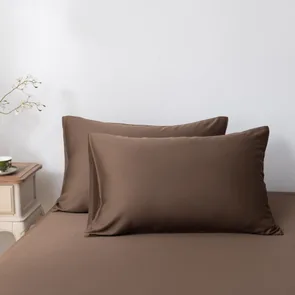
The bedroom should be a daydreaming-friendly space. Phone out of reach (or out of the room entirely). Soft lighting. A bed comfortable enough to lie on for half an hour without needing to do something else. Good bedding isn't just for sleeping — it's for the moments before sleep, the slow Sunday mornings, the stolen hour with a book. The kind of bed you want to spend time in.
Permission to be useless
Daydreaming feels like wasted time because productivity culture has trained us to feel that way. But the brain that produces good thinking is one that has time to wander. Five minutes of staring at the ceiling does more for creative work than five hours of grinding through tasks.
Give yourself permission. The world won't end. Your inbox can wait. Your brain needs the silence.
OUR CATEGORIES





ANOTHER TALE BEFORE BEDTIME