Free shipping in NL, BE and DE – worldwide delivery

Restoring your sleep routine after a holiday
Holidays mess with sleep. Here's how to reset properly so the post-holiday slump doesn't last for weeks.
You came back from holiday relaxed. Three days later, you're somehow more tired than before you left. The culprit isn't the trip itself — it's the way your sleep rhythm shifted while you were away. Late dinners, different time zones, lazy mornings, mid-afternoon naps. Your body clock is confused. The good news: with a deliberate three-to-five-day reset, you can be back in rhythm without the lingering slump.
- Why holidays disrupt sleep
- The first night home
- The three-day reset
- Use daylight as your tool
- Make the bedroom work for you
Why holidays disrupt sleep
Your circadian rhythm — the internal 24-hour clock that controls sleep — is calibrated by light, meal times, and consistency. Holidays change all three. Even without crossing time zones, late nights, irregular meals, alcohol, and weak morning routines move your sleep window by hours. The body adjusts quickly going one way (staying up later) but resists adjusting back.
The first night home
Don't try to catch up on sleep with a long lie-in the next morning. It backfires. Instead:
- Wake at your normal weekday time, even if you're tired
- Get outside within an hour of waking — this is non-negotiable
- Eat breakfast, even small, on schedule
- Skip the afternoon nap, even if it's tempting
- Be in bed at your usual time, no later
You'll feel rough for one day. By day two it's already easier.
The three-day reset
Day 1: Normal wake time, no nap, light dinner, in bed at usual time.
Day 2: Same wake time, exercise during the day (even a long walk), avoid caffeine after 2pm, in bed slightly earlier than usual.
Day 3: By now your body should be largely back on schedule. Continue with normal weekday timing including weekends, just for this first week home.
If you crossed multiple time zones, allow one day of recovery per hour of difference. See tips to overcome jet lag.
Use daylight as your tool
Morning daylight is the single most powerful tool for resetting your body clock. Aim for 10–20 minutes outside within the first hour of waking. Even cloudy days are sufficient — outdoor light is much brighter than any indoor lighting. This signals your brain to start the 24-hour countdown to sleep.
In the evening, do the opposite: dim the lights, avoid bright screens, and let your body recognise that night is coming.
Make the bedroom work for you
Coming back from a hotel — where bedding was usually tightly tucked, the room was cool and dark, and there were no clutter or work piles — and returning to a less-disciplined bedroom can subtly slow your readjustment. Two upgrades that help:
- A cool bedroom (16–19°C) signals sleep — see our temperature guide
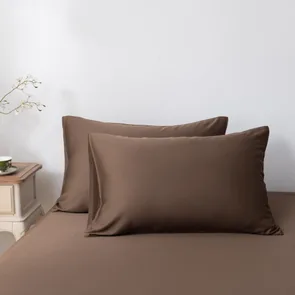
- Breathable bamboo bedding helps your body lose heat as it falls asleep, supporting that initial drop in core temperature that triggers deep sleep
The post-holiday slump usually fades inside a week if you're deliberate about resetting. The trap is just one more lie-in — that's what stretches a 3-day reset into a 3-week one.
Curious what this looks like in practice? Have a look at our bamboo duvets.
OUR CATEGORIES





ANOTHER TALE BEFORE BEDTIME