Free shipping in NL, BE and DE – worldwide delivery

The Quiet Luxury of Natural Fibres
Bedding has joined the wider shift towards quiet luxury — less branding, more provenance. What that means in practice.
The phrase quiet luxury started in fashion. It moved through interiors. By 2026 it's reached bedding — and unlike many of the journey's previous stops, it actually changes something useful, not just aesthetic.
What's actually shifted
Five years ago, the premium bedding aisle was full of heavy patterns, statement colours, embroidered logos and dramatic marketing language. The talk was of indulgence and treats.
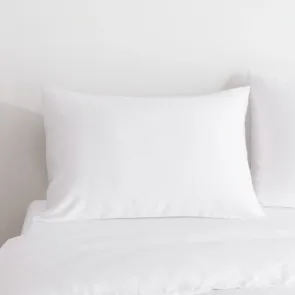
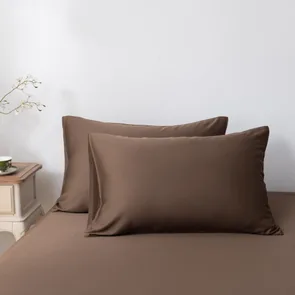
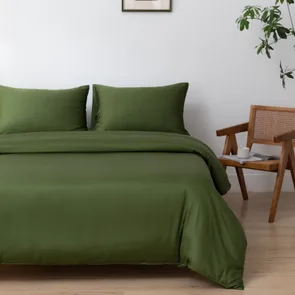
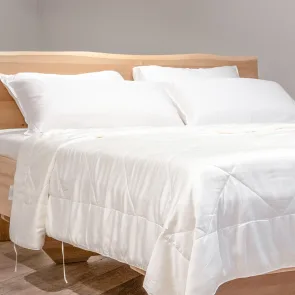
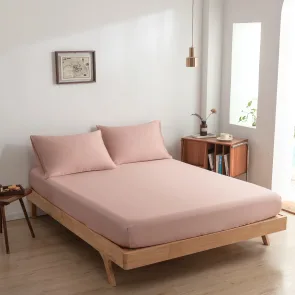
Today, the equivalent shelf in any independent linens shop in London or Edinburgh is dominated by plain, undyed or softly-coloured sheets in single tones — soft sage, cream, dusty rose, off-white — with the sustainability credentials prominently labelled. The brand name is small, sometimes invisible. The certification numbers are large. (Related reading: our note on minimalist bamboo bedding.)
This isn't a marketing whim. Consumer research firms tracking UK home textiles consistently report that consumers under 45 now rate third-party certifications and supply chain transparency higher than designer name and thread count when choosing premium bedding. That's a substantive shift in what counts as luxury.
What quiet actually means in fabric
Three concrete changes are visible:
Plain over patterned. A single tone with subtle texture replaces the busy patterns and embroidered detailing of a decade ago. Practical effect: easier to combine, harder to date, ages more gracefully through washing.
Certified over claimed. Eco-friendly and natural without certification have lost market share. OEKO-TEX® Standard 100 and Organic 100 (OCS) are now visible on most respected brands' packaging and product pages. The consumer is reading the certificate, not the brand story.
Material over thread count. The old marketing equation (higher thread count = better) is fading. A 400TC bamboo viscose properly certified outperforms a 1000TC poly-cotton blend on every measurable dimension. The number is no longer the headline.
Where bamboo fits
Bamboo viscose has become a quiet-luxury staple specifically because it answers the new criteria. It's:
- A genuine natural fibre, when properly certified
- Substantially more moisture-wicking than cotton
- Soft in a way that doesn't depend on chemical finishing
- Available with full supply chain transparency from a small number of brands
The catch — and it matters — is that not all bamboo bedding is created equal. Cheaper bamboo can be processed using viscose methods that involve harsh chemicals. Without OEKO-TEX® Standard 100 and ideally Organic 100, the fibre's clean image isn't guaranteed.
How to read a bedding label in 2026
Look for, in order of importance:
- Certification numbers, not logos. OEKO-TEX®'s public database lets you search and verify.
- Country of weaving and country of finishing, both. Many premium brands now disclose both. Vague imported or designed in claims tend to obscure things.
- Fibre composition, exactly. 100% bamboo viscose is clear. Made with bamboo usually means a blend, often with polyester.
- Thread count, last. A useful signal within the same fabric, but not across different fibres.
What this means practically
A reasonable bedding investment in 2026 looks like this: two or three sets of certified bamboo viscose in a neutral colour, washed at 30°C, replaced every eight to twelve years. Quiet, transparent, functional. The opposite of the loud-luxury era — and substantially better at the actual job of sleeping.
OUR CATEGORIES

ANOTHER TALE BEFORE BEDTIME