Free shipping in NL, BE and DE – worldwide delivery

Making your bedroom cosy
Cosy isn't a style — it's a feeling. The specific elements that turn any bedroom into a place you actually want to be.
Cosy gets used to sell everything from sofas to shampoo, but the actual ingredients of a cosy bedroom are surprisingly specific. It's not just about looks — it's about how the space makes you feel when you walk in. Warm, soft, considered, calm. Here's how to build it without resorting to clichés (or buying a wool blanket every time you feel stressed).
- Warm light, not bright light
- Layered textures
- A grounded colour palette
- The bed treatment
- The small details that matter
- The one cosy rule
Warm light, not bright light
Cosy starts with light. Replace cool-white bulbs (anything above 3500K) with warm-white at 2700K or below. Add bedside lamps with fabric or paper shades — diffused light is softer than spotlit. Skip the overhead light at night. A bedroom with three small light sources at 2700K feels twice as cosy as the same room with one bright overhead.
Layered textures
Cosy = soft + soft + slightly different soft. Layer multiple fabric textures on the bed and around the room:
- Smooth bamboo duvet cover as the base
- A chunky knit throw folded across the foot of the bed
- A linen or velvet cushion for contrast
- A wool rug under or beside the bed
- Heavier curtains than you'd usually pick
The variety creates visual softness. The room reads as warm before you even feel it.
A grounded colour palette
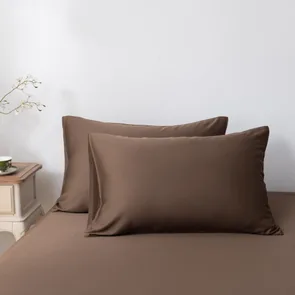
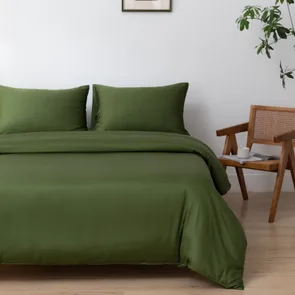
Cosy colours sit lower on the saturation scale and warmer on the colour temperature scale. Soft Taupe, Coffee Brown, warm cream, dusty rose, muted forest green. Avoid bright cold blues and stark whites — they're calming but not cosy.
The bed treatment
The bed is where cosy lives. Make it generous:
- An oversized duvet that drapes over the sides
- Multiple pillows — even if only two are functional, the visual layering matters
- A blanket folded at the foot — even when not needed for warmth
- Soft, breathable bedding — bamboo is genuinely both cosy and breathable, which most fabrics aren't
The made bed but soft look beats either a perfectly tight hospital corner or a chaotic unmade tangle.
The small details that matter
- A book on the bedside — present, not displayed
- A candle — actual or LED, low and soft
- One or two plants — soften the geometry of the room
- A draft of warm tea — if you're enjoying the room, you might as well
- Slippers next to the bed — practical and visually grounding
The one cosy rule
Soft + warm + considered = cosy. Hard surfaces, cold colours, harsh light, or visual clutter = not cosy. If something in the room reads as one of those four not cosy things, change it. Most bedrooms become cosy by removing things, not by adding more.
For a winter-specific take, see the indoor season begins again.
OUR CATEGORIES




ANOTHER TALE BEFORE BEDTIME