Free shipping in NL, BE and DE – worldwide delivery

Interesting facts about bamboo
Things about bamboo that even bamboo fans often don't know — from world-record growth rates to why it survives just about anything.
Bamboo isn't actually a tree. It's not even a kind of wood. It's a grass — the largest grass in the world, and one of the most extraordinary plants on the planet. Once you start digging into bamboo, the facts get genuinely surprising. Here are the ones worth knowing, both for context and for understanding why bamboo bedding is more than just another fabric option.
- What bamboo actually is
- The fastest-growing plant on Earth
- Why it's so sustainable
- Stronger than you'd expect
- Surprising uses
- Cultural and ecological role
What bamboo actually is
Bamboo is a member of the grass family Poaceae. There are over 1,400 species, ranging from tiny dwarf varieties to giants over 30 metres tall. The largest species (Dendrocalamus giganteus) can have stems 30 cm thick — bigger than most tree trunks, even though it's still technically grass.
The fastest-growing plant on Earth
Some bamboo species can grow up to 91 cm per day — that's nearly a metre, in a single 24-hour period. You can literally watch certain species grow visibly. Most species reach full mature height within 2–3 months, then spend the next few years strengthening rather than getting taller. By comparison, a hardwood tree might take 30–80 years to reach mature size.
This is the foundation of bamboo's sustainability case: the same forest can be sustainably harvested again and again without ever running down.
Why it's so sustainable
- No replanting needed — bamboo regrows from the same root system after harvesting
- No pesticides or fertilisers — naturally pest-resistant due to its antibacterial properties
- Minimal water — uses about a third of the water that cotton needs for the same yield
- More oxygen — bamboo produces 35% more oxygen per area than equivalent forest of trees
- Carbon sequestration — bamboo absorbs more CO₂ than most other plants
- Soil retention — extensive root systems prevent erosion and improve soil health
Stronger than you'd expect
Bamboo's tensile strength rivals steel. It's been used for centuries in construction, scaffolding (still used today in Hong Kong's high-rises), bridges, and even early bicycles. Its hollow internal structure makes it remarkably strong-for-weight — like nature's version of an engineered tube. The first incandescent light bulb? It used a carbonised bamboo filament, until Edison switched to tungsten.
Surprising uses
Bamboo turns up in more places than people expect:
- Bicycles, kitchenware, flooring, scaffolding (the structural uses)
- Toothbrushes, hairbrushes, baby toys (the daily uses)
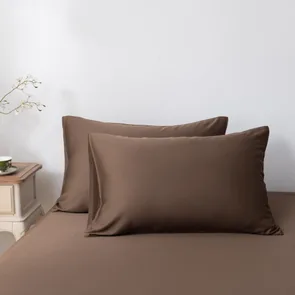
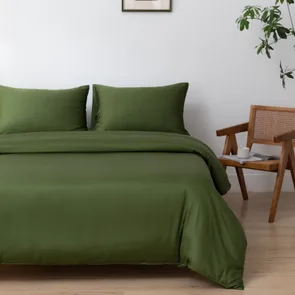
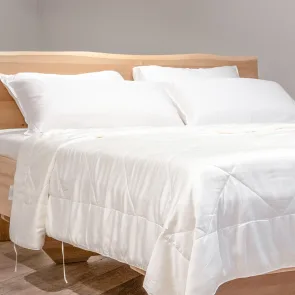
- Fabrics for bedding, towels, clothing, socks, underwear (the textile uses)
- Food — the young shoots are a staple in Asian cuisine
- Charcoal — bamboo charcoal absorbs odours and humidity
Cultural and ecological role
Bamboo has been culturally significant in Asia for thousands of years — symbol of strength and flexibility in Chinese culture, of integrity in Japanese culture, of prosperity in much of South-East Asia. Ecologically, bamboo forests support over 1,000 species, including pandas (whose entire diet is bamboo). Some species only flower once every 60–120 years — and when they do, every plant of that species worldwide flowers simultaneously, regardless of location.
From the soil it grows in to the bedding on your bed, bamboo is one of the most extraordinary materials humans have ever made use of. Worth understanding, worth choosing.
Curious what this looks like in practice? Have a look at our what we make from it.
OUR CATEGORIES



ANOTHER TALE BEFORE BEDTIME