Free shipping in NL, BE and DE – worldwide delivery

A good exercise routine is a good sleep routine
Exercise is one of the most underused sleep tools — but only if you get the timing right. The why and the how.
Most people who exercise regularly will tell you they sleep better. Most people who sleep badly will tell you they don't have the energy to exercise. Both are right — and that's the puzzle. Movement and sleep are tightly connected, but the connection isn't simply more exercise = better sleep. Timing, intensity, and consistency all matter. Here's how to use exercise as a sleep tool that actually works.
- Why exercise improves sleep
- The timing trap
- Intensity vs consistency
- Different types, different effects
- Don't forget recovery
Why exercise improves sleep
Movement does several things that support sleep simultaneously. It raises core body temperature during exertion, then drops it more sharply afterwards — and that drop signals sleep time to your brain. It uses up nervous-system energy that would otherwise keep you wired at bedtime. It improves the depth of slow-wave sleep (the most restorative kind). And over weeks, it shifts the body clock to a more regular rhythm.
The timing trap
This is where most people get it wrong. Intense exercise within 2–3 hours of bedtime can make sleep harder, not easier. Adrenaline is still elevated. Body temperature is still high. Your nervous system is still in go mode.
The sweet spot: morning or afternoon for vigorous workouts. If evening is the only time you can train, choose lower-intensity movement — yoga, walking, mobility work — anything that doesn't spike your heart rate.
Intensity vs consistency
Five 30-minute walks beat one heroic 90-minute gym session, sleep-wise. The body responds better to consistent moderate movement than to occasional all-out efforts. If you're starting from zero, aim for daily movement at low intensity. Progress from there. Sustainable beats impressive.
Different types, different effects
- Cardio (running, cycling, swimming): the most studied for sleep benefits. Increases deep sleep when done regularly.
- Strength training: improves sleep quality and reduces nighttime awakenings, especially in older adults.
- Yoga and stretching: particularly effective in the evening. Lowers heart rate and prepares the nervous system for sleep.
- Walking outdoors: the underrated all-rounder. Combines movement with daylight exposure, which sets your body clock.
Don't forget recovery
Exercise creates micro-damage in muscles that the body repairs during sleep — particularly during deep sleep, when growth hormone peaks. Skip the sleep, and the muscle adaptation suffers. Skip the exercise, and the deep sleep drops. They feed each other.
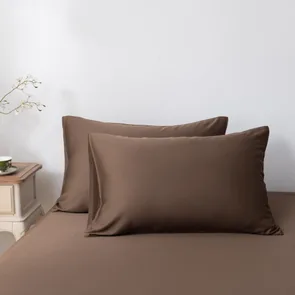
The other half of recovery: bedding that doesn't fight you. Breathable bamboo bedding helps with the post-exercise temperature drop, particularly if you trained in the evening. The body cools more efficiently, deep sleep starts earlier, and morning soreness is measurably lower.
Movement and sleep are the two pillars of recovery. Get them both right, and almost everything else in your health gets easier.
OUR CATEGORIES





ANOTHER TALE BEFORE BEDTIME