Free shipping in NL, BE and DE – worldwide delivery

6 tips to help your child sleep better
Six things you can change today to help your child sleep more deeply, longer, and wake up actually rested.
If you have a child who fights sleep, wakes up too early, or simply seems exhausted in the morning — you're not alone, and you're not failing. Children's sleep is sensitive to dozens of small variables, and most of them are fixable. Here are six tips that consistently work, in order of how much difference each one makes.
- 1. A consistent bedtime routine
- 2. The right bedroom temperature
- 3. Bedding that breathes
- 4. Screens off, an hour before bed
- 5. The right kind of light
- 6. Outside time during the day
1. A consistent bedtime routine
This is by far the biggest one. Children's bodies thrive on signals — the same sequence, in the same order, at roughly the same time, every night. Bath, pyjamas, story, lights low, bed. Twenty to thirty minutes is enough. The exact activities matter less than the predictability.
Stick to the routine on weekends too, ideally within an hour of weekday timing. Children whose schedules drift on Saturdays often have rough Mondays.
2. The right bedroom temperature
Children sleep best in a cool room — slightly cooler than what feels comfortable to most adults during the day. Around 16–19°C is ideal. Too warm, and they wake up sweaty and restless. Too cold, and they fight to fall asleep. If you can't directly control temperature, focus on what they're sleeping in (next tip).
3. Bedding that breathes
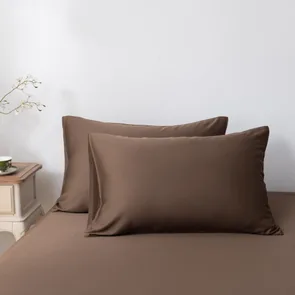
Children sweat more than adults relative to their body size. Bedding that traps moisture wakes them up — even when they don't fully realise why. Bamboo bedding is excellent for kids: temperature-regulating, naturally hypoallergenic, and gentle on sensitive skin.
For toddlers and small children specifically, see why bamboo is a good choice for children's bedding.
4. Screens off, an hour before bed
The blue light from tablets, TVs and phones suppresses melatonin — the hormone that signals it's time to sleep. Even short screen exposure in the hour before bed can delay sleep onset by 30–60 minutes. Books, drawing, calm conversation, audio stories — anything analogue works.
This applies to parents too. Children read parental cues; if you're scrolling on the sofa, they want to be on a screen too.
5. The right kind of light
In the bedroom: warm-toned light (under 2700K), dimmable if possible. Fluorescent overhead lights signal daytime to a child's brain. A small bedside lamp with a warm bulb signals winding down. For night-lights, choose red or amber — these don't disrupt melatonin the way blue or white light does.
6. Outside time during the day
Children who get at least 30 minutes of outdoor daylight, especially in the morning, fall asleep more easily at night. The body's internal clock is calibrated by morning light exposure. This works whether it's bright sunshine or grey overcast — outdoor light is still much stronger than indoor light. Even a walk to school counts.
One more thing
If your child has been sleeping badly for weeks despite all the right habits, talk to your GP. Sleep apnoea, restless leg syndrome, and silent reflux can all affect children — and they're treatable. Bedding and routine help, but they don't fix everything.
For more: getting the temperature right for kids and choosing a toddler duvet.
OUR CATEGORIES





ANOTHER TALE BEFORE BEDTIME